

How to Prepare a Pallet for LTL

Menu
How to Prepare a Pallet for LTL Shipping
Build, wrap and label your pallet so it survives forklifts, terminals and shared trailers.
- Licensed freight broker
- MC 63254743 · USDOT 6965061
- 1–6 pallets, U.S. only
- Instant rates for 1–6 pallets, skids or crates
- Bill of lading created for you
- Pay by card, ACH or approved invoice terms
Why does packaging matter so much in LTL?
LTL freight is moved by forklift several times and shares trailers with other shipments. A pallet that is not square, wrapped and labeled is more likely to be damaged, delayed or remeasured.
Last updated: November 8, 2026
Your freight must be palletized or crated, wrapped, labeled and ready to load when the carrier arrives. DAGO Freight does not palletize or wrap freight, and the driver does not load or unload. Good packaging is also the basis of any damage claim: carriers are not liable for freight that was not packaged securely for transport.
How do I build an LTL pallet?
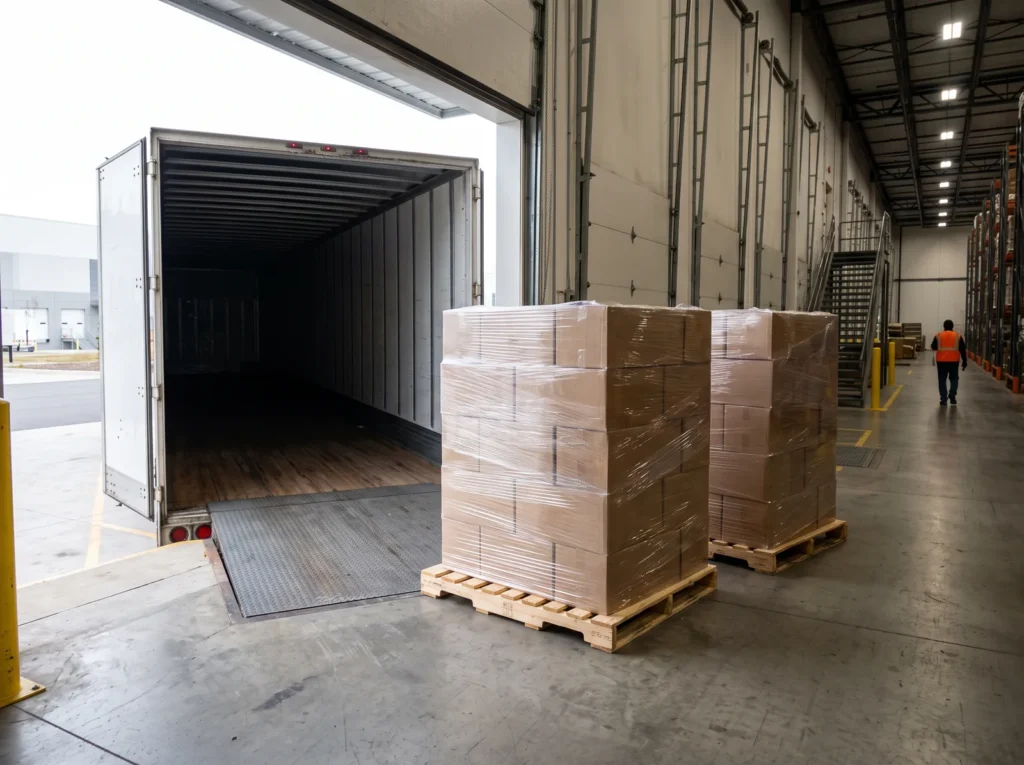
Pick a sound pallet, stack the heaviest boxes at the bottom in a square column within the edges, add corner protection, stretch-wrap the load to the pallet and label every unit.
- Choose the pallet. Use a pallet without broken boards that fits the footprint of the load.
- Stack heavy to light. Heaviest cartons at the bottom, interlocked or column-stacked, with a flat top.
- Stay inside the edges. No overhang; it adds to the measured size and gets crushed.
- Protect edges. Use corner boards on tall or fragile loads.
- Wrap tightly. Stretch-wrap from the pallet base to the top, tying the load to the pallet.
- Strap if needed. Band heavy or unstable loads to the pallet.
- Label. Put a label on at least one side of every unit with consignee, BOL number and “1 of N”. Remove old labels.
- Measure and weigh. After wrapping, measure and weigh for the quote.
What are the most common packaging mistakes?
Overhang, loose wrap, pyramid stacking, missing labels and marking freight stackable when it cannot carry weight.
| Mistake | What happens | Fix |
|---|---|---|
| Cartons hang over the edges | Crushed boxes, larger measured size | Use a bigger pallet or restack |
| Wrap only around the boxes | Load slides off the pallet | Wrap down onto the pallet base |
| Pyramid or uneven top | Cannot stack, more damage | Build a flat, square top |
| No labels or old labels | Misrouting, shortages | Label every unit, remove old labels |
| Fragile goods marked stackable | Damage from freight on top | Mark non-stackable and protect the top |
What about crates, machinery and hazmat?
Crate fragile or irregular items, bolt or strap machinery to a skid, and declare hazardous materials in the quote: hazmat is reviewed and priced by our team before booking.
Crates and skids are booked like pallets in the quote form. Units over 2,500 lbs or longer than 96 in are priced by our team. We do not accept household goods or temperature-controlled freight. See pallet shipping and the pallet dimensions guide.
Frequently asked questions
Do you palletize my freight?
No. Your freight must be palletized or crated, wrapped and labeled before pickup.
Does the driver load the pallet?
No. The shipper loads at pickup and the consignee unloads at delivery. Book a liftgate if there is no dock or forklift.
How many labels do I need?
At least one per handling unit, showing the consignee, BOL number and unit count such as “1 of 3”.
Is stretch wrap enough?
For most cartons, yes, if it ties the load to the pallet. Heavy or unstable loads also need straps or bands.
Can I reuse a pallet?
Yes, if it is sound with no broken or missing boards.
Does packaging affect claims?
Yes. Freight that is not packaged securely for transport may not be covered by the carrier.
Ship your next pallet with DAGO Freight.
Get an all-in rate in seconds. Book when you are ready.
DAGO Freight is a brand of DAGO Express Inc., a licensed freight broker (MC 63254743, USDOT 6965061). DAGO Freight does not operate trucks.