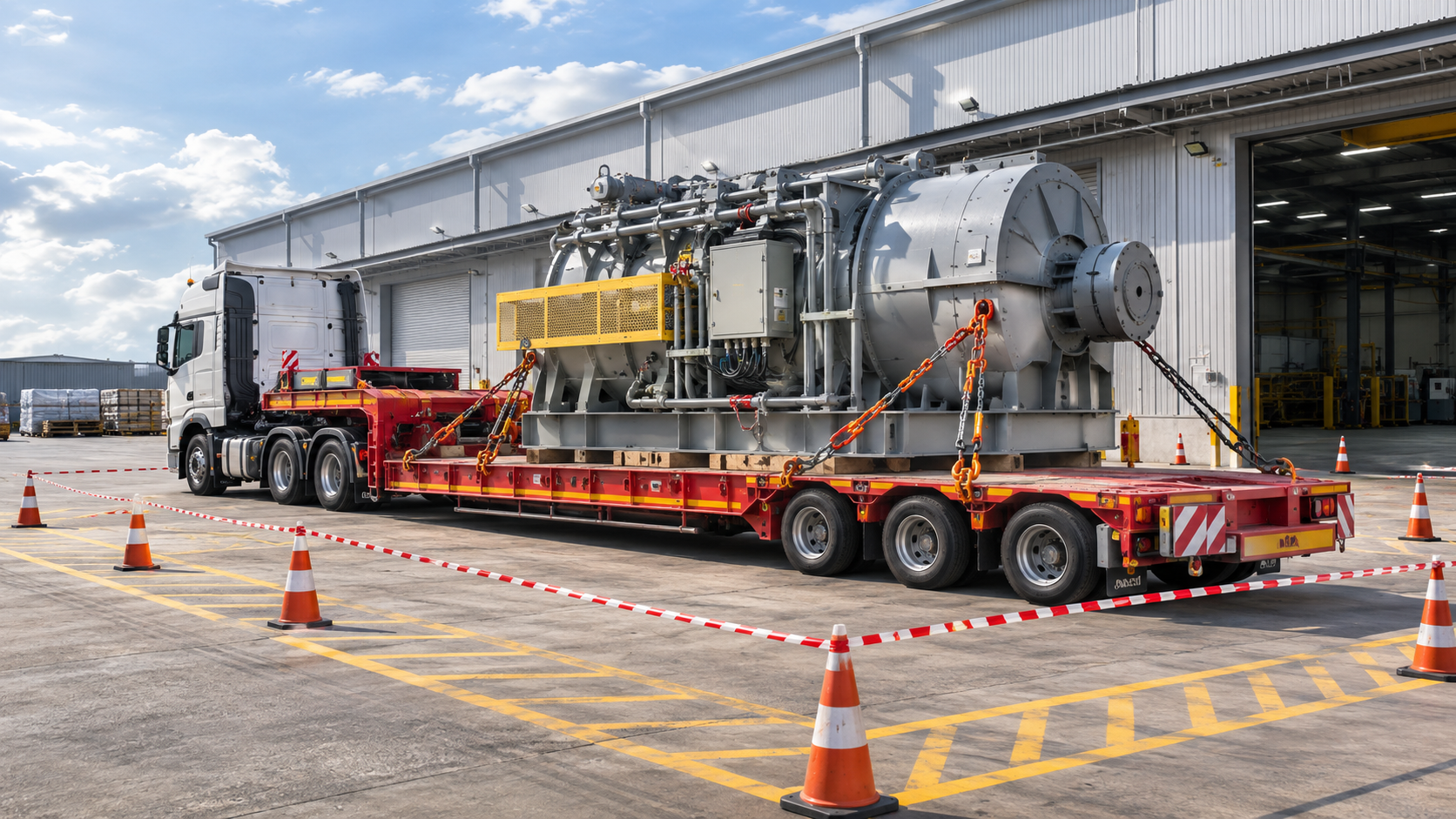
Oversize load planning begins with the complete transport configuration, not just the dimensions on a machine’s sales brochure. The carrier needs to understand the cargo, trailer, loaded height, overall dimensions, weight distribution and route. A shipment may fit on a trailer yet still require permits, route restrictions or additional coordination before it can move.
Oversize and overweight are separate questions. A wide lightweight structure can exceed a dimensional limit without being particularly heavy, while a compact machine can create weight or axle-load concerns. Give the specialist carrier verified information so it can assess both. Do not book a standard vehicle and leave the permit question until collection day.
Measure the transport-ready load
Record the cargo’s length, width, height and weight in its actual shipping condition. Include crates, protective frames, protruding components and supports. Identify removable parts and whether disassembly is technically approved. A proposed reduction in dimensions must account for the work, responsibility and reassembly requirements it creates.
Provide center-of-gravity information, support points and approved lifting or securing instructions where relevant. These details help the qualified parties choose equipment and handling methods. They are not interchangeable with a generic photograph of a similar machine. Mark drawings clearly and confirm which revision describes the shipment being moved.
Understand the jurisdiction and route
In the United States, dimensional and weight requirements depend on the road network, vehicle configuration and jurisdiction. The FHWA commercial vehicle size guidance describes the 102-inch federal width standard on the National Network and notes that there is no federal vehicle height limit. That does not establish permission for a particular load on every road.
The carrier or permit specialist must check the applicable state and local requirements, route restrictions and approvals. Avoid treating a general threshold found online as a complete permit decision. Escort requirements, travel windows and other conditions must be determined for the actual movement, not assumed from another shipment.
Evaluate the entire route, including the last mile
A permit route can still require careful coordination at the origin and destination. Review turning space, gate width, gradients, ground conditions and overhead constraints with the responsible specialists. The last few hundred yards may be more restrictive than the highway portion.
Do not use an ordinary navigation route as authorization for an abnormal load. The transport team needs the approved route and a process for handling closures or changes. If a planned road becomes unavailable, the response should be coordinated before an unauthorized alternative is attempted.
Build an unloading plan before requesting a firm schedule
Confirm who provides the crane, forklift or other handling equipment, who operates it and what information those specialists require. The equipment must suit the actual load and conditions. Establish safe exclusion areas and site responsibilities through qualified personnel; an article cannot supply a lifting plan for a specific machine.
Our construction delivery guide explains how site readiness affects the appointment. A truck arriving on time does not solve an unprepared receiving area. Match the transport window to equipment availability, site access and the people authorized to accept the cargo.
Give the carrier a complete request package
- Transport-ready drawings and current photographs.
- Verified cargo dimensions, weight and relevant load-distribution data.
- Loading and unloading addresses, including actual gates.
- Approved lifting, support and securing information where applicable.
- Site access constraints and handling-equipment arrangements.
- Earliest readiness date, required delivery window and flexibility.
- Contacts authorized to resolve technical and scheduling questions.
Ask the provider to identify assumptions and exclusions in the offer. Clarify whether permit work, escorts, route assessments, waiting time and specialized handling are included or separately priced. A complete truckload quote request reduces the chance of comparing materially different scopes.
Allow for dependencies rather than promising a fixed lead time
Permit processing, route review, equipment availability and site preparation can all affect readiness. There is no single lead time that fits every oversize movement. Ask for the critical dependencies, the party responsible for each and the point at which the schedule becomes confirmed.
For example, a fictional machine delivery may depend on an unloading crane and a restricted site access window. Moving the pickup date by one day can require more than changing the carrier’s calendar. The receiving reservation and relevant movement conditions must be rechecked together.
Control changes after the quote
A late-added crate, different support frame or revised unloading gate can change the transport assessment. Freeze the approved shipment specification, then route changes through the responsible carrier and technical teams. Keep the latest documents accessible to the people executing the move.
At delivery, record condition and handover evidence. For a later-discovered issue, retain the documentation described in our freight damage guide. Good oversize planning connects accurate measurements, authorized routing and site readiness into one coordinated movement.
Use a change log for technical assumptions
List the confirmed dimensions, weight, support arrangement and site conditions with the date and approving party. If the machine supplier changes a transport frame, identify the exact difference and send the updated information to the carrier before dispatch. Small-looking changes can affect loaded height, securing or route suitability.
A photograph helps explain a change but should not replace a required measurement. Likewise, a previous successful movement does not prove that a different trailer or destination can use the same plan. The change log makes the current basis visible and reduces the risk of different teams working from different drawings.
Hold a readiness review before the vehicle moves
Check the remaining dependencies together: cargo ready, required approvals in place, route confirmed, handling resources available and site contacts informed. Record unresolved items and the person authorized to decide whether dispatch may proceed. Avoid a vague group assumption that someone else has checked the final prerequisite.
After completion, compare planned and actual loading, travel restrictions and unloading. Keep the findings specific. An access issue may require a revised gate plan, while a delay caused by unavailable handling equipment calls for better reservation control. Preserve useful site knowledge for the next movement without treating a past permit or technical plan as permanently reusable. This disciplined review supports safer coordination and more accurate future quotations without pretending that every oversize load can be standardized.