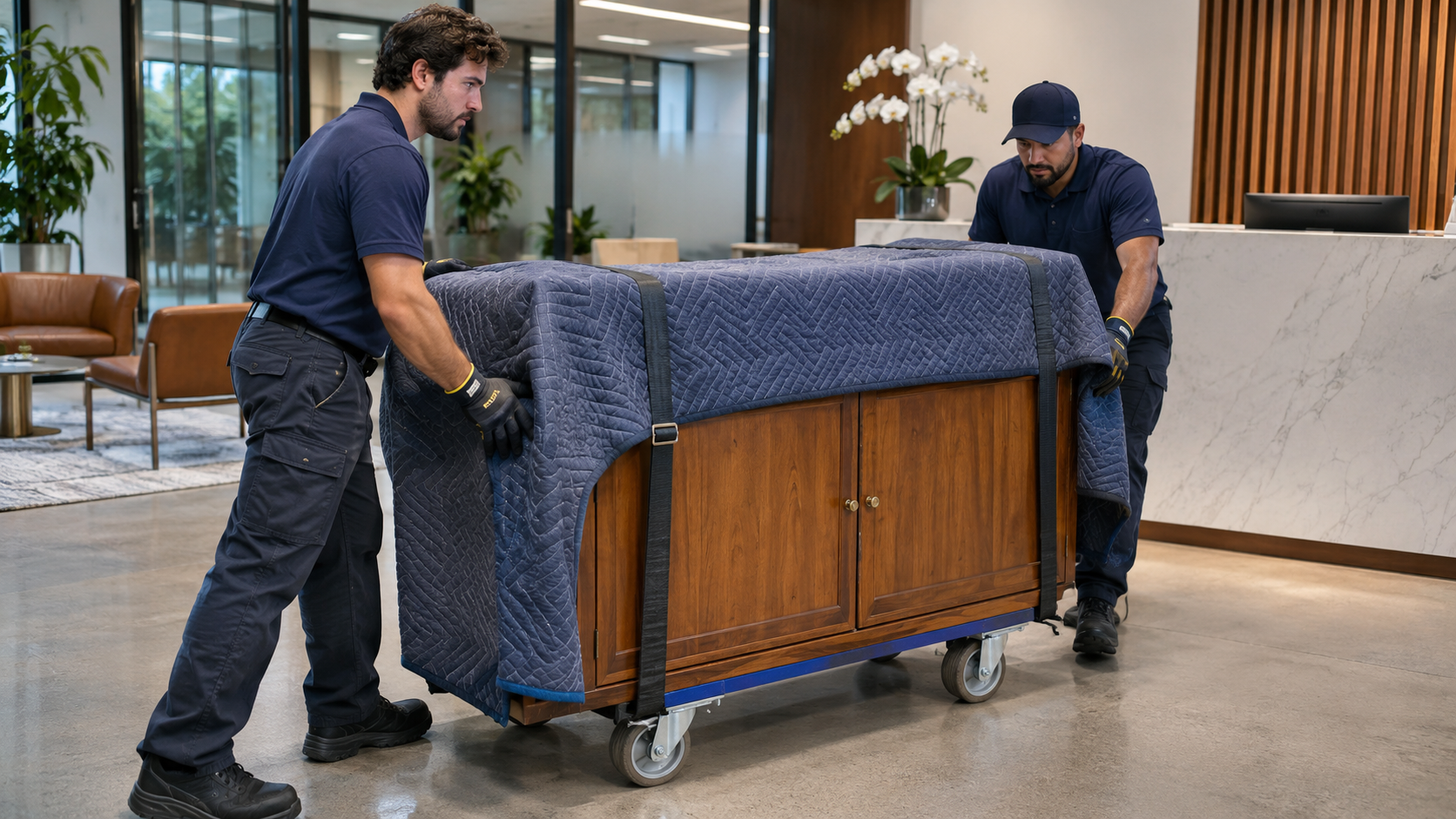
White glove delivery is a service arrangement that adds carefully specified handling at the destination, often including placement, unpacking or selected assembly tasks. It is not a universal package of services. What one provider calls white glove may differ substantially from another provider’s offer, so the written scope matters more than the label.
Businesses use these services for furniture, equipment and other items that need more than a conventional freight handover. The key planning question is where responsibility ends: at the curb, inside a receiving area, in a particular room or after an agreed setup task. Confirm that point before promising an experience to your customer.
Separate the service components
Curbside delivery, threshold delivery, inside delivery and room-of-choice placement describe different endpoints. A liftgate helps transfer suitable freight between vehicle and ground; it does not automatically include carrying goods upstairs. Likewise, unpacking does not necessarily include assembly, installation or removal of an old item.
Write a task list with a clear acceptance criterion for each service. For example, placing a cabinet in a designated room is different from fixing it to a wall. Electrical connection, plumbing, commissioning and specialist installation require separately agreed capabilities. Do not assume a delivery crew is authorized or qualified to perform them.
Survey the route through the building
Measure the packaged item and the access route, including doors, elevators, corners and stairs. Consider both width and turning space. A doorway wider than the item may still be unusable if there is no room to turn into it. Provide photographs when useful, but confirm measurements rather than estimating from an image.
Ask about parking, loading reservations, security registration, elevator bookings and protective requirements for floors or walls. The receiver should identify obstacles before arrival and make the agreed route available. If access changes, contact the provider before dispatch so the crew and equipment can be reassessed.
Match people and equipment to the item
Supply the gross weight, dimensions, center-of-gravity concerns and fragile surfaces. State whether the product can be tilted and whether the packaging has handling instructions. The delivery provider must assess the appropriate crew and equipment; the shipper should not invent a lifting plan from the number of people available.
Items that require temperature control, hazardous-material handling or specialist technical work need additional review. White glove is not a substitute for those requirements. An attractive service description should never hide a mismatch between the item and the carrier’s actual capability.
Understand the main cost drivers
Distance and the basic transport service are only part of the price. Building access, stairs, crew size, time on site, appointment restrictions, unpacking, packaging removal and approved assembly can all affect the quotation. A remote receiving point or an unsuitable loading area may require a different plan entirely.
Compare offers using the same task list. Ask what happens if the receiver is unavailable or the item cannot pass through the stated route. Record waiting, storage and redelivery terms. Our freight invoice checklist helps reconcile the final charges with the services that were actually approved.
Example: delivering an office cabinet
A customer orders a heavy cabinet for a third-floor office. The shipper books inside delivery but does not specify the floor, elevator dimensions or room placement. The crew arrives prepared for a ground-floor handover. The problem is not solved by describing the order as premium after the truck arrives.
A complete booking confirms the packed dimensions, suitable access, elevator reservation, final room and unpacking requirements. If assembly or wall attachment is required, that work is separately assigned. A nominated receiver inspects the item and signs for the actual tasks completed, with any exceptions recorded accurately.
Prepare the receiver before dispatch
Send the receiver the delivery scope in plain language. Include what the crew will do, what the receiver must prepare and who should be contacted if conditions change. Do not pass a technical tariff to a customer and assume they understand its practical effect.
Confirm appointment arrangements and the contact’s availability. A general business opening time may not match the availability of a loading dock, building manager or freight elevator. For multiple locations, keep these requirements in a shipping routing guide with a separate site profile for each destination.
White glove booking checklist
- Identify the item, packaged dimensions, weight and handling restrictions.
- Specify the exact handover location and every requested task.
- Verify doors, turns, stairs, elevators and the available delivery route.
- Confirm parking, building permissions and appointment requirements.
- Allocate assembly, installation and removal tasks explicitly.
- Agree what happens if access or receiver availability differs from the booking.
- Document condition, completed work and exceptions at handover.
Keep delivery evidence and claims separate
Inspect packaging and goods at the appropriate stage, and record visible issues factually. Preserve useful photographs and the delivery paperwork. If damage appears only after unpacking, follow the concealed damage process promptly. A delivery note and a formal claim serve different purposes.
Finally, review failed deliveries by cause. If the same building repeatedly creates problems, improve its access profile. If customers misunderstand the scope, revise the order confirmation. White glove delivery works best when expectations, access and tasks are specific enough that the receiving customer and the delivery crew are preparing for the same service.
Define acceptance without creating an ambiguous promise
A delivery checklist should describe the agreed tasks in observable terms. “Placed in the reception area” is clearer than “fully installed” when installation has not been included. Separate unpacking, placement, assembly, connection, testing and removal of packaging. Each can require different skills, equipment and authorization.
Ask the receiver to confirm the access route and the person who can sign for the completed scope. If the intended room is unavailable, the crew needs an agreed escalation process rather than an improvised alternative that creates extra handling later. Record any approved change to the placement location or task list.
Compare two proposals using the same task list
One offer may include a two-person crew and indoor placement while another stops at a building entrance. The prices are not directly comparable until those differences are resolved. Request clarification of stairs, distance from vehicle to room, waiting, packaging removal and any site restrictions that affect the work.
Consider a pilot delivery for repeated installations across several locations. Measure access issues, task completion, damage and the receiver’s understanding of the service. Update the location checklist before scaling. Do not use the term white glove as a substitute for that checklist: its value lies in an agreed, executable service scope that everyone can verify at handover. Clear instructions protect the customer experience and give the delivery team a realistic job to perform.